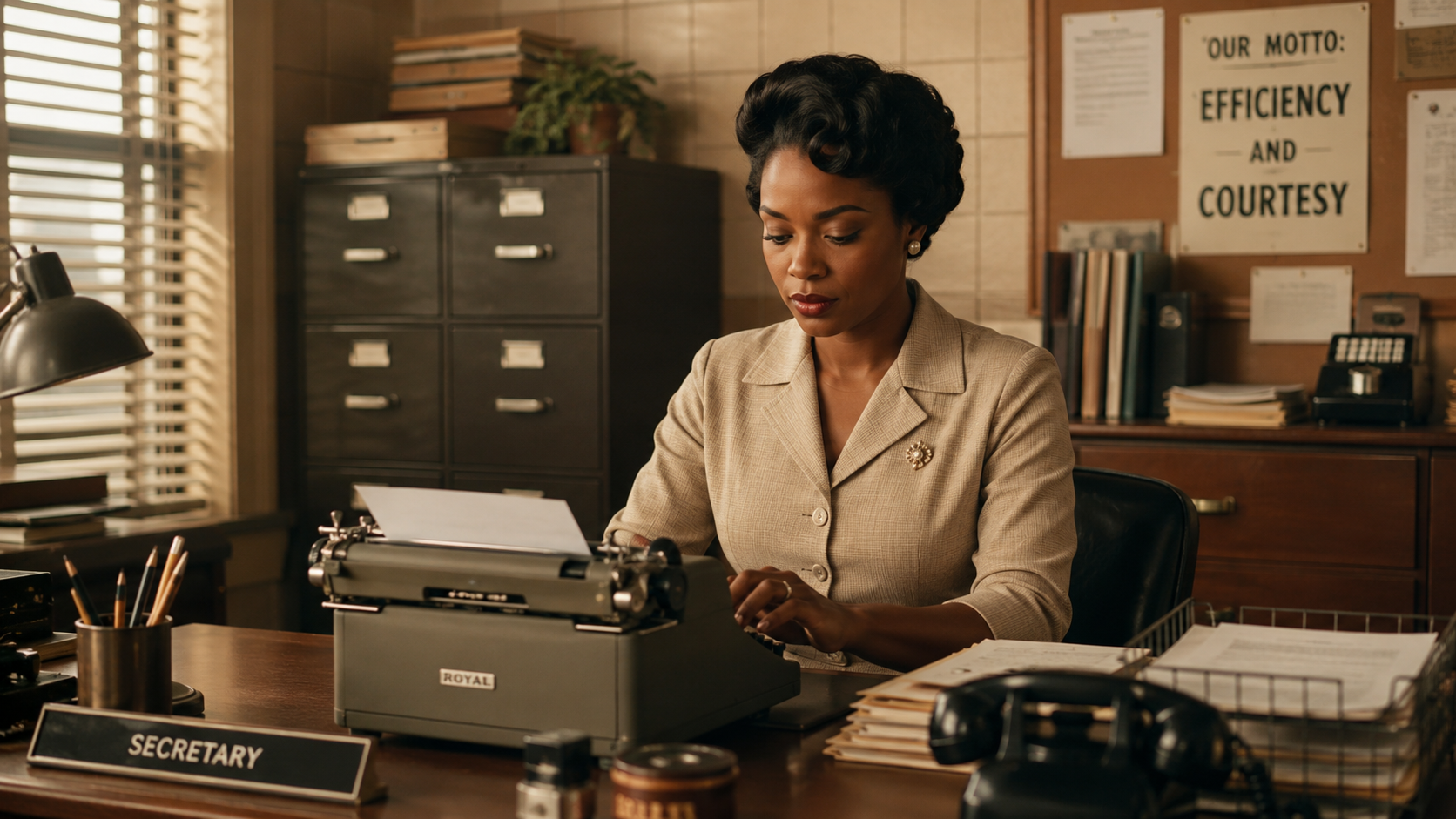
Years ago, I knew a man who was important enough to have a job that came with a secretary. Part of his role required him to read a lot — mostly books. But he didn’t like turning pages.
So he had his secretary print out every page of the book, one at a time, so all he had to do was hold a single sheet, read it, and set it down. No page-turning required.
I remember thinking that seemed like a lot to ask of someone. But it was her job — printing for him, preparing his correspondence, even returning phone calls on his behalf.
The Part That Mattered
Here’s what stood out to me, though. Everything she did for him — the letters, the calls, the pages — was never absent of his direction. It was his wisdom and his judgment she carried out, even in moments she may not have agreed with. She executed. He decided.
That’s exactly how I see AI.
AI Is the Secretary. You’re Still the One Deciding.
When we ask AI to do something — write a caption, build a spreadsheet, draft an email — we’re having a conversation. We’re directing it. And whatever it creates is something we asked it to create.
- AI can save you time.
- AI can do in seconds what might take you an hour.
- AI is convenient, and that convenience is real and valuable.
But the judgment? The wisdom? The decision of what’s right, what fits, what actually serves you or your business — that still belongs to you. AI doesn’t replace that. It was never supposed to.
Why This Matters
A lot of what we do, we’re capable of doing ourselves. It would just take longer. That’s the whole value of AI — it hands you back time so you can spend it on the things that actually need you: the relationships, the decisions, the parts of your role no one else can carry.
Think of AI less like a replacement and more like that secretary — capable, efficient, and always working from your direction. Not the other way around.